Abstract · the bottom line
Start with a specific reader need, reliable sources, sensible headings and product-appropriate crawl controls. Search retrieval can involve ranking; it is not a replacement for ranking. OpenAI says ChatGPT ranks search results using multiple factors and does not guarantee placement. Google says its AI features rely on core Search ranking and quality systems. Neither establishes a universal citation timetable or a five-factor formula.
"Ranking" Is the Wrong Word
Both classic search and AI answers can vary with query wording, time, location and user context. A position or citation recorded in one response describes that response, not a permanent slot. ChatGPT documentation describes rewritten queries, location and optional memory affecting search.
Retrieval finds candidate information; ranking can order those candidates; generation composes a response; displayed citations connect readers to sources. These are distinct stages, not a single identical pipeline used by every provider. Google describes retrieving ranked web pages and reviewing specific information within them, while Gemini API Search grounding is an explicitly enabled developer tool. API behavior does not establish what every consumer-app answer did.
Set the goal in observable terms: a brand mention, a link to your domain, a link to a particular page, or a useful referral. Do not treat those as interchangeable. There is no sourced universal count of two to seven passages that all engines select, and no documented rule that a page without a standalone answer cannot be cited.
Five Practical Publishing Checks
The following checks make content easier for people to use and technical problems easier to diagnose. They are editorial recommendations, not five necessary ranking factors confirmed across every engine. Use provider-specific requirements where documented and keep hypotheses separate from requirements.
1. Does the passage answer the question on its own?
Answer a reader's question directly where that improves clarity, and retain the context needed to understand it. There is no first-two-sentences rule. Google explicitly says chunking content into tiny pieces and rewriting it in a special AI style are not required. Do not split a coherent explanation into fragments just to satisfy a supposed passage extractor.
2. Can the engine parse the structure?
Use descriptive headings, accessible text and tables where the information genuinely suits a table. Structured data should describe the visible page accurately, not invent facts or duplicate promotional claims. Google does not require special schema for generative AI search. FAQPage is not a citation prerequisite; Google stopped showing FAQ rich results in May 2026.
3. Is the claim specific enough to check?
Make claims checkable with named sources, dates, units and the relevant population. An illustrative statement such as “14 of 17 sampled tools offered a trial on the recorded date” would need the actual sample and evidence before publication; it is not a count measured for this guide. Specific numbers without support are no better than vague prose. Keep limitations next to the claim.
4. Is it current?
Correct obsolete facts and show what changed, but preserve the dates and populations of historical observations. Google describes query-dependent freshness systems, not a rule that every old page loses eligibility. A timestamp bump is not new evidence, and this guide has no comparative experiment establishing that one assistant weights recency most heavily.
5. Can the crawler reach it?
Check the controls for the product you want to reach. OpenAI separates OAI-SearchBot for ChatGPT search from GPTBot for training. Googlebot and snippet/indexing controls apply to Google Search AI features; also review Search Console's Search generative AI inclusion setting. Google-Extended is a robots.txt product token controlling specified Gemini training and grounding uses, not a separate HTTP crawler or a Google Search ranking signal. Check current Perplexity bot documentation and Anthropic's training, search and user-fetch bot documentation for their distinct uses rather than assuming a training bot governs all search. Check CDN restrictions and indexability too; a sitemap is a discovery aid, not a citation guarantee.
Where the Engines Genuinely Differ
Compare documented product behavior, not invented weights or typical citation lags. This guide does not have evidence for its former 2–7, 7–21 or 14–45 day ranges, or for calling Claude the strictest and slowest engine; those claims are withdrawn.
| Surface | Documented distinction | What to record |
|---|---|---|
| ChatGPT search | Can search automatically or through the Search tool; placement is not guaranteed | Search mode, answer, inline citations and other source-panel links separately |
| Google AI Overviews / AI Mode | Search features using core ranking systems; may use query fan-out | Which feature appeared and the linked page; do not pool the two products |
| Gemini Apps / Gemini API | App links are conditional; API Search grounding is a developer configuration | App or API, model if exposed, tool configuration and displayed sources |
| Perplexity / Claude / Copilot | Separate products and search configurations, not interchangeable model names | Exact app or API, enabled search, locale, prompt and source links |
Choose the surface your audience uses, not a promised fastest citation window. Follow the product documentation above and the companion guides for ChatGPT, Perplexity, Gemini, Claude, Copilot and Google AI Overviews. Do not assume any app or API exposes the provider's full internal retrieval process.
How to Tell If It's Working
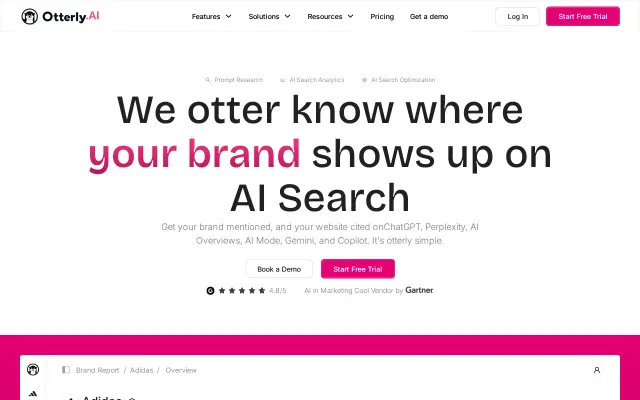
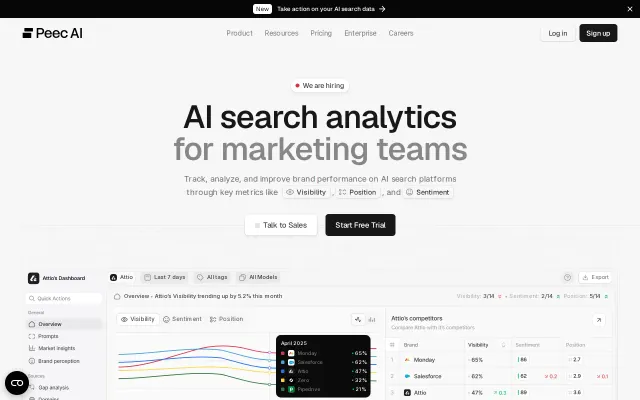
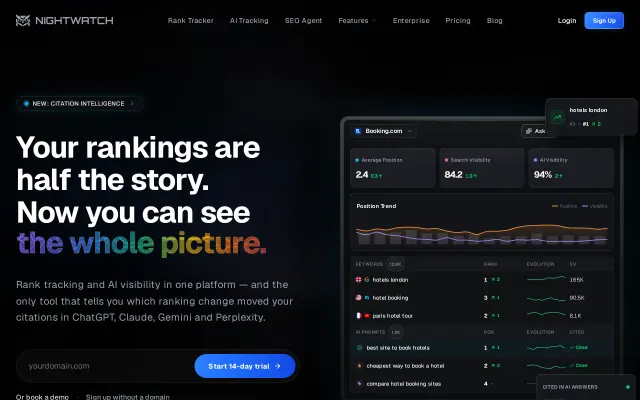
You can begin without a paid tool. Maintain a small, fixed panel of relevant prompts in a spreadsheet; record exact wording, date, locale, product surface, search setting, conversation context, answer text and linked URLs. Keep mentions, inline citations and other related links separate. Repeat on a declared schedule, retain failed or unavailable observations as missing rather than zero, and compare like with like. Our monitoring category and comparison can help evaluate automation. Otterly AI, Peec AI, Nightwatch, RankScale, LLMrefs and Semrush AI Visibility Toolkit remain examples to investigate, not newly verified pricing or capability endorsements in this correction. Ask for raw captures and a definition of which UI or API is sampled.
For Google, Search Console now documents an AI-feature impressions report covering AI Overviews and AI Mode with page, country, date and device dimensions. It does not establish the hidden query fan-out or give a universal citation rank. A manual panel or vendor tracker samples a different population from actual user impressions. Before/after movement is descriptive, not proof your edit caused it; product changes, prompt mix and sampling variation can also move the result. See our measurement workflow for denominators and uncertainty.
Avoid Unsupported Ranking Shortcuts
Do not assume backlinks are irrelevant to all AI retrieval. Google documents link analysis and PageRank as part of its core ranking systems, and its AI features use those core systems for retrieval. That does not establish a particular backlink weight for an AI citation or justify buying links. This guide withdraws its blanket claim that no AI engine uses inbound links directly.
Avoid keyword stuffing and unsupported claims that domain age, format or any other isolated property guarantees or prevents a citation. Clear wording helps readers; no source here establishes a universal weighting formula across the covered products. Provider policies and user relevance matter more than a purported cross-engine shortcut.
A good Google position is not a guarantee of citation, and low overlap in a study does not prove SEO signals are irrelevant. ChatGPT describes using search partners and multiple ranking factors; Google explicitly retains SEO fundamentals in its AI features. Treat each observed citation as evidence about that response, not proof of a platform-wide causal rule.
Frequently Asked Questions
How do I rank on AI search engines if I'm starting from zero?
Start with one useful, sourced page and confirm product-appropriate search access and indexability. Use clear headings and accurate facts; special FAQPage or Article markup is not a universal citation requirement. Establish a repeatable manual prompt panel or an auditable tool workflow, without promising a citation deadline.
Is there a single AI search ranking algorithm I can optimize for?
No single cross-provider ranking formula is documented. Retrieval can use ranking, and providers may use search partners rather than an exclusive index. Keep product surfaces separate and use their documented requirements; the five checks here are publishing advice, not universal algorithm factors.
How long before a new page gets cited by an AI engine?
There is no supported cross-engine citation timetable in this guide. Crawl, index and source-selection timing vary, and an eligible page may never be cited for a chosen prompt. The former 2–7, 7–21 and 14–45 day ranges were unsupported and have been withdrawn.
Do I need a paid tool to know if I'm being cited?
No. A scheduled manual panel with saved answers, settings and source URLs can produce a useful record. Paid tools can automate collection, but their surface and methodology must be disclosed. Neither a manual panel nor a tool alone turns a before/after change into causal proof.
Editorial correction, 5 September 2026: Corrected universal ranking factors, training-versus-search controls, citation-delay claims and paid-tool-only measurement advice against the linked documentation. These are recommended workflows, not tests executed by CitedIndex. Historical publication and verification dates are preserved; vendor prices, capabilities and engine outcomes were not newly re-verified.