Abstract · the bottom line
Google's guidance says no special markup or mandatory content chunking is needed for AI search. Eligibility and useful content matter, but neither guarantees selection. The March 2026 Ahrefs study of 863,000 keyword SERPs and 4 million AI Overview URLs reported 37.9% overlap with the first ten result blocks and 37.1% with the first ten organic blue links. Those are different denominators, not an August re-test or evidence that fan-out alone caused a decline. Observe your own pages using a manual panel, Search Console reporting or a tracker with an explicit AI Overviews surface.
Why Google AI Overviews Aren't a Normal SERP Feature
An AI Overview is a generated summary within Search, with links to supporting material. Google describes it as a jumping-off point for further exploration. That stated purpose is not evidence that every reader clicks or that publisher traffic is preserved.
Google says AI Overviews often do not trigger because its systems show them when they add to classic Search. There is no permanent citation slot to earn. AI Mode is a separate Search experience, and Gemini Apps and developer APIs are separate surfaces again.
Prevalence depends on what is sampled and when. The historical table below contains reports and unresolved attributions from the earlier edition; it is not five simultaneous measurements of all Google searches. A high or low prevalence estimate says nothing by itself about which publisher tactics cause citations.
How Google Actually Picks Sources: Query Fan-Out
Google's Search Central explanation says both AI Overviews and AI Mode may use query fan-out: multiple related searches across subtopics and data sources. Its optimization guide explains that these searches retrieve relevant results using core Search systems. It does not say fan-out is the sole selector or that one best passage is always chosen per sub-question.
For illustration, a broad question about visibility tools could lead to searches about pricing or engine coverage. These are hypothetical related questions, not queries observed from a real Google answer. Helpful sections can address those reader needs without duplicating a page for every possible query variation.
A page can be cited without ranking in the top ten for the original typed query, as the dated Ahrefs study below shows. That does not establish that it was the “best available passage” for a hidden sub-query. A monitoring tool or manual capture can record the original query and displayed linked pages; it generally cannot prove the complete internal fan-out. Simulated expansions should be labeled as simulations, not observed Google queries.
What the Data Actually Shows
Separate three questions: how cited URLs overlap with a result set, how often a feature appears within a sample, and whether an editorial change caused a citation change. The studies below address the first two, not the third. Preserve each date, sample and denominator instead of treating a reported percentage as a universal probability.
Citation overlap: distinguish result blocks from organic links
In Ahrefs' 2 March 2026 analysis of 863,000 keyword SERPs and 4 million AI Overview URLs, 37.9% of cited URLs appeared in the first ten result blocks, including ads and SERP features; 31.2% were in blocks 11–100 and 31.0% beyond those. In the organic-blue-links-only calculation, the corresponding figures were 37.1%, 26.2% and 36.7%. The July 2025 study reported 76.1% top-ten overlap from 1.9 million citations across 1 million AI Overviews, examining the top three visible citations. Ahrefs says parsing improved between studies, so these are not a controlled time series establishing the size or cause of a change. The earlier edition's claimed August 2026 re-test is not supported by the located article and is withdrawn. A separate August 2025 study of 15,000 long-tail prompts reports 11.9% from an average of five assistant series including Perplexity and two ChatGPT series; despite inconsistent wording in its introduction, it is not a Gemini-only or three-engine average.
Overview prevalence: a historical table with attribution limits
The earlier edition presented these five values as comparable 2026 reports. That framing was wrong: dates differ, at least one date was misassigned, and not all exact historical source records were recoverable. Values without recoverable support below are preserved as the earlier edition's unverified attributions, not endorsed measurements. Do not use them as current prevalence estimates.
| Tracker | Reported prevalence | Sample / date |
|---|---|---|
| Earlier edition: Advanced Web Ranking | Recorded as 48%; exact attribution unverified | Recorded as March 2026, with 34.5% Dec 2025 and 31% Feb 2025 comparisons; matching primary snapshot not recovered |
| Xponent21 reporting AWR data | 60.32% | US 8,000-keyword dataset, screenshot dated 10 November 2025, article published 16 November 2025; not April 2026 as this guide previously stated |
| Earlier edition: Similarweb | Recorded as ~43%; exact primary report unverified | Recorded as US searches, May 2026 “Generative AI Landscape”; not a newly verified panel measurement here |
| Earlier edition: Conductor | Recorded as 25.11%; exact source period unverified | Recorded as 21.9M queries / Q1 2026 benchmark; original collection period not established by this review |
| Earlier edition: Semrush | Recorded as ~15.7%; matching report unverified | Recorded as 10M+ keywords, November 2025 after ~24.6% in July; not a same-period 2026 measurement |
A tracked keyword panel is not the same population as all real searches, and a published report date is not necessarily its data-collection date. Compare geography, device, personalization, intent mix and inclusion rules before comparing values. Do not treat the spread of this partly unverified historical table as proof of disagreement between five independent trackers, especially because Xponent21 explicitly reused AWR data.
Citations reach well outside the traditional SERP
The March 2026 Ahrefs analysis reported that YouTube URLs made up 18.2% of AI Overview-cited pages outside the top 100 results for the same keyword and 5.6% of all cited AI Overview URLs in that dataset. Keep those denominators distinct. The observation does not prove that every such URL was retrieved only via fan-out, nor that creating a YouTube video causes a citation.
Three Claims About AI Overviews That Aren't True
Treat precise selection-lift claims skeptically unless the original study, sample and method can be inspected. Google's documentation supports the corrections below; this guide has not run a test establishing a lift percentage for markup or a writing format.
Myth: you need special schema markup to appear
Google says no special schema.org markup, AI text files or mandatory chunking is needed. Structured data may support eligible Search features when accurate, but FAQPage is not an AI Overview requirement and FAQ rich results stopped appearing in May 2026. Article markup does not guarantee a rich result or citation either.
Myth: AI Overviews run on a separate ranking algorithm
Google explicitly roots its AI features in core Search ranking and quality systems. That supports continuing SEO fundamentals; it does not establish that generation adds no additional source-selection techniques or that the internal algorithm is completely documented.
Myth: the safe strategy is to rank #1 and wait
A top organic position is not a guarantee of selection. The overlap studies are descriptive and do not measure the probability of citation conditional on ranking first. Use helpful content and technical eligibility checks, then record the displayed sources on relevant queries. Do not replace a head-keyword obsession with a requirement to target every imagined fan-out question.
A Useful Content Structure
Organize content for readers, not a presumed citation extractor. Google recommends clear paragraphs, sections and useful original content while rejecting mandatory tiny chunks or special AI wording. The following are practical editorial suggestions, not experimentally established ranking factors.
Less useful: a category page that gives only promotional generalities and leaves the buyer unable to find prices, coverage or limitations.
More useful: the same page with clear, sourced answers to important buyer questions, retaining context and caveats. A reader should be able to find and verify the facts. This is a usability recommendation, not a promise that each section receives its own fan-out search or citation.
- Use a direct answer where it helps the reader; retain necessary explanation rather than forcing every section into a fixed sentence count.
- Cover relevant buyer questions with sensible headings. Do not manufacture separate content for every possible query variation.
- Use accessible HTML tables for genuinely tabular comparisons, with dates, units and linked sources; no universal citation lift is established here.
- Prioritize crawlability and useful content instead of special AI markup, following the Google guidance above.
- Correct stale facts and keep dateModified honest. Preserve the dates of historical measurements rather than recasting them as current.
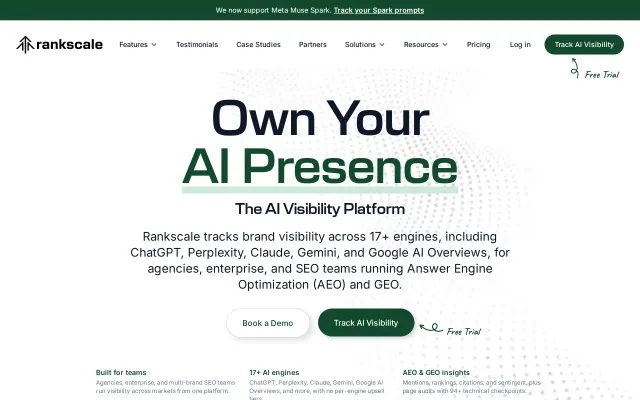
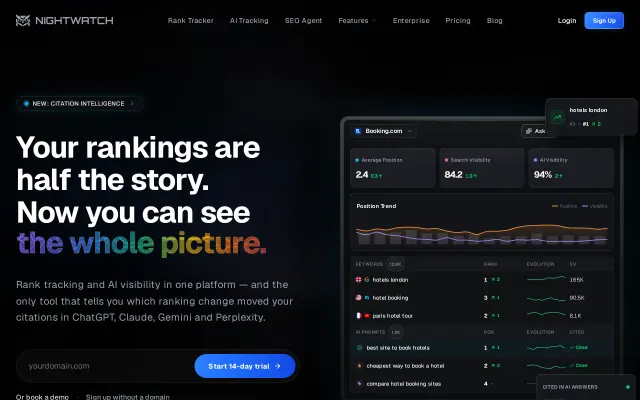
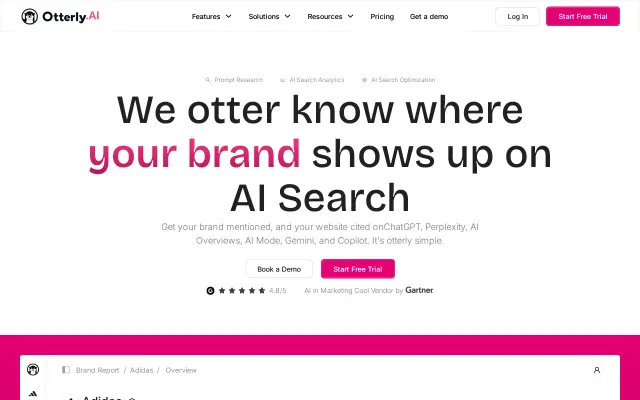
- Record original queries and displayed linked pages manually or with a tool such as RankScale, Nightwatch or Otterly AI. Ask what surface and settings it captures; do not present inferred sub-queries as Google telemetry.
Google's Search generative AI control manages inclusion in AI Overviews and AI Mode separately from other Search inclusion. Google says it rolled out worldwide on 31 August 2026 and defaults to inclusion unless inherited or changed. Review the effective property and parent settings rather than changing your training policy to obtain Search visibility. Google-Extended controls specified training and non-Search grounding uses, not Search ranking.
For measurement, Google now documents an AI-feature impressions report covering AI Overviews and AI Mode, with page, country, date and device dimensions. It is not a complete list of hidden fan-out queries or a citation rank. A fixed manual prompt panel can complement this user-impression data; a paid tracker is optional. Preserve prompts, locale, device, time and raw links, and treat before/after movement as descriptive rather than causal proof.
Implementation Checklist
Tick items off as you implement, this page remembers your progress on this device.
Content Structure
Don't Chase the Wrong Signals
Technical & Crawlability
Measurement
Working through this checklist? Get the digest, new guides, checklist updates and who's earning the citations, one short email.
Frequently Asked Questions
Is there such a thing as a "rank" in Google AI Overviews?
AI Overviews can display ordered links, and trackers may assign positions, but there is no universal publisher citation rank equivalent to an organic ten-link ladder. Record the response and linked pages; a vendor position is its own measurement, not a Google guarantee.
Do I need special schema markup to appear in Google AI Overviews?
No special schema or AI text file is required. Google also says mandatory tiny content chunks are unnecessary. Accurate structured data may serve supported Search features, but FAQ rich results were retired in May 2026 and markup is not a citation guarantee.
Does ranking #1 in Google guarantee an AI Overview citation?
No. Ahrefs' March 2026 sample of 863,000 keyword SERPs and 4 million AI Overview URLs reported 37.9% top-ten result-block overlap and 37.1% organic-blue-link overlap. Those statistics are not the probability that a number-one page is cited, and no August re-test was established in this correction.
What is query fan-out, and why does it matter for content structure?
Google says AI Overviews and AI Mode may issue related searches across subtopics and data sources. This does not reveal the full selection algorithm or create a requirement to write a separate fragment for every imagined sub-query. Structure content around real reader needs.
How often do AI Overviews actually appear in Google Search?
There is no universal prevalence rate established here. The historical table mixes dates and samples, and some source attributions remain unverified. In particular, Xponent21's 60.32% report refers to AWR's November 2025 8,000-keyword US dataset, not April 2026.
Which AI-visibility tools actually track Google AI Overviews specifically?
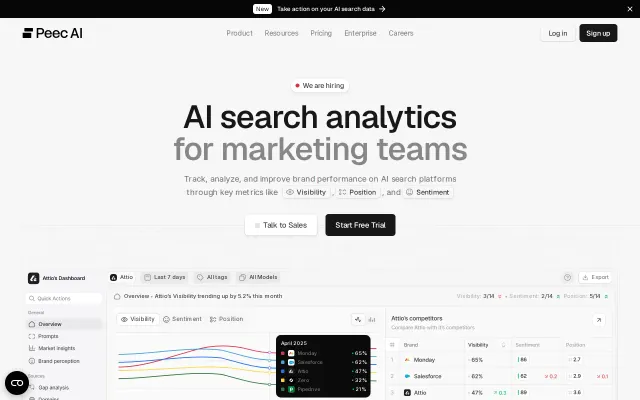
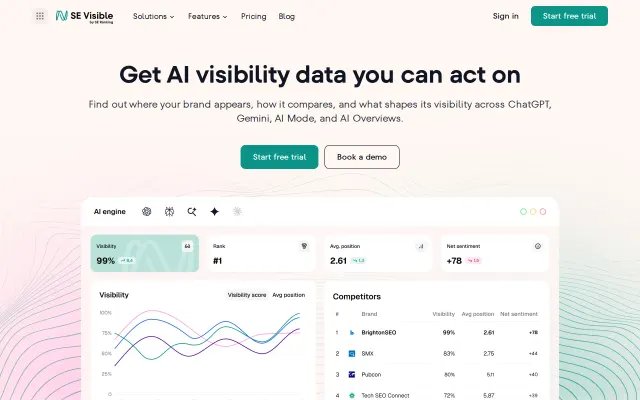
The linked listings and rank-tracker comparison cover RankScale, Nightwatch, Otterly AI, Peec AI, AthenaHQ, SE Visible and Scrunch AI as options to investigate. Confirm current AI Overviews coverage, exact collection surface and metric definitions with the vendor; capabilities were not newly re-verified in this correction.
Is an AI Overview citation the same thing as a featured snippet?
No. An AI Overview is generated content with supporting links; a featured snippet is extracted content. They are different Search features. Avoid inferring an identical source-selection method or a universal link count from either format.
What's the difference between AI Overviews and AI Mode?
AI Overviews are summaries within regular Search results; AI Mode is a conversational Search experience. They may use different models and techniques. Gemini Apps and Gemini API are separate surfaces, so observations from them should not be counted as AI Overviews results.
Where to go from here
About this guide: Sourced editorial education about Google Search AI features, not first-hand testing of citation tactics. Linked Google documentation supports the procedural guidance; third-party studies retain their own dates, populations and limitations. See our methodology.
Editorial correction, 5 September 2026: Corrected organic-link versus result-block denominators, unsupported August re-test and causal fan-out claims, Xponent21's date, schema advice, crawl controls and measurement options. Original publication and verification clocks remain unchanged. The unresolved historical prevalence attributions are explicitly marked; vendor capabilities, historical verification activity and current citation outcomes were not newly re-verified.