How to Get Cited by Perplexity
A sourced guide to Perplexity crawler controls, accurate content maintenance and manual citation checks, separating documented capabilities from untested ranking advice.
Covers 1 topic
- Perplexity
Perplexity can answer with links to web sources. For publishers, the useful starting point is Perplexity’s documented crawler and user-fetch controls, then inspection of actual answers. This guide distinguishes the consumer product from developer APIs and offers practical maintenance steps. It does not claim to reveal proprietary ranking weights or guarantee when your page will be cited.
Abstract, the bottom line
Allow intended public content to be reached by legitimate Perplexity agents, keep important facts accurate, and inspect citations against the underlying pages. Perplexity documents separate PerplexityBot and Perplexity-User agents, neither used to crawl or collect content for foundation-model training. That narrow statement is not a guarantee about all possible uses of public content. Fixed freshness windows, citation counts and schema-related lifts previously asserted here were not substantiated and are withdrawn.
How Perplexity Actually Works
The consumer Perplexity interface and developer APIs are distinct surfaces. A web-grounded answer may synthesize information and link to sources, but its source selection must be observed in the particular mode used. An API setting is not evidence of an identical setting or retrieval pipeline in the consumer interface.
Sonar API documentation describes domain, date and location filters and search controls. These are developer configuration capabilities, not a published sequence of BM25 retrieval, embedding retrieval and ranking weights for every consumer query. This guide no longer presents that speculative pipeline as established fact.
There is no fixed ten-candidate/three-to-five-citation rule established by the cited documentation. The number of linked sources depends on the request and product configuration. Read the actual answer and source list rather than treating an assumed source count as an optimization target.
How Perplexity's Crawlers Reach Your Site
PerplexityBot is designed to surface and link sites in search results. Perplexity recommends allowing it in robots.txt and permitting requests from its published IP ranges. Perplexity-User supports user actions and may visit a page to answer a question; the documentation says it generally ignores robots.txt because the fetch was user-requested. Perplexity says neither agent is used to gather content for foundation-model training. Allowing access does not guarantee indexing or citation.
robots.txt directives
To permit the documented crawler, avoid disallowing PerplexityBot and check that your server or WAF permits legitimate requests. To ask the background crawler not to crawl the site:
User-agent: PerplexityBot
Disallow: /
Perplexity says settings may take up to 24 hours to be reflected. That is a crawler-control propagation period, not an indexing or citation SLA. A disallow can also be scoped to a path such as /internal-docs/.
The second crawler: Perplexity-User
Perplexity-User generally ignores robots.txt for user-requested fetches. Verify user-agent strings against the separately published IP lists when allowing or identifying these agents. Sensitive material should require authentication and authorization rather than rely on a voluntary robots rule or a bot-specific denylist; the documented WAF allow-list examples are not a complete confidentiality control.
Maintaining Accurate Information
Sonar API search controls include a search classifier and a switch to disable search. This directly contradicts a claim that every API query must search. It does not establish the consumer interface’s defaults. Maintain prices, specifications and policies because readers need accurate information, not because this guide has measured a universal freshness advantage.
The recency window
No source inspected for this correction establishes a universal 30-day citation boost or a 48–72-hour ranking window. Update a page when its facts change, not to satisfy an invented schedule. Do not change a timestamp without a substantive edit or use freshness as a substitute for relevance and evidence.
Crawl priority isn't equal
The crawler documentation does not publish a domain-by-domain recrawl schedule or guarantee that major domains are revisited within hours. A dated correction or changelog helps readers see what changed; it is not evidence of a measured ranking lift. Use logs to establish whether a real crawler reached a page rather than guessing from domain size.
This review found no documented promise that a new or updated page will be indexed or cited within a particular number of days. Record publication, legitimate crawler visits and observed citations as separate events. A missing citation does not by itself diagnose a crawl failure.
What Citation Evidence Can Tell You
A useful citation study names its collection dates, prompts, product surface, locale and denominator. The prior guide’s broad claims about Reddit share, a dispersed long tail and schema-driven citation lifts did not identify inspectable studies. They are not retained as measured findings.
Reddit is a source to inspect, not a universal shortcut
If Reddit threads appear in answers relevant to your audience, inspect the particular discussions and whether the citation supports the answer. A discussion citation is not necessarily a citation of your own site. Participate only where you can contribute useful, disclosed information and follow community rules. This is distribution advice, not proof of a universal Reddit ranking advantage.
Measure your own source mix
Count cited URLs and domains in a defined answer sample, retaining the original answers and dates. Distinguish the percentage of answers citing a domain from its percentage of all citations; these are different denominators. A broad industry ranking cannot tell you your own topic’s citation mix or establish that a small domain can outrank an incumbent.
Structure and schema: clarity advice, not a measured lift
Use descriptive headings, accessible tables where helpful, and genuine question-and-answer sections to make content understandable. Structured data should accurately match the visible content and responsible author or organization. The sources inspected here do not establish that adding Article, FAQPage or Person markup causes a measurable Perplexity citation increase. Do not treat credentials, schema types or answer length as magic ranking inputs.
The Perplexity Playbook
Crawlability (do this first)
- Confirm robots.txt doesn't disallow
PerplexityBot. Check it explicitly, don't assume a generic AI-bot block leaves it out. - Verify crawler IPs against Perplexity's published PerplexityBot range if you're auditing server logs for real visits vs. spoofed traffic, and check live-fetch traffic against the separate Perplexity-User range if that distinction matters for your logs.
- Keep the pages you want cited in your sitemap.xml and out of noindex.
Accuracy and honest change dates
- Update
dateModifiedonly when the page's substance actually changes. Stale timestamps on unchanged content are easy for readers, and over time ranking systems, to catch. - Review statistics, prices and examples when they may have changed; choose a cadence appropriate to the subject, not an alleged engine freshness window.
- Publish original data only when you actually collected it and can describe the method, date and population. Otherwise cite the original source and do not imply first-hand research.
Structure and credibility
- Lead with the useful answer while retaining qualifications and supporting detail. This is editorial advice, not a documented reranker rule.
- Add Article schema (headline, datePublished, dateModified, author) and FAQPage schema where the content is genuinely Q&A.
- Use a real named author with a credentialed bio, not "Admin" or no byline.
- Where relevant, contribute honestly to category discussions and distinguish third-party mentions from citations to your own pages.
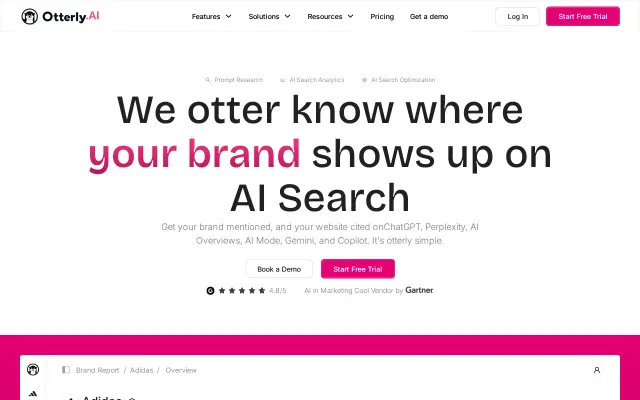
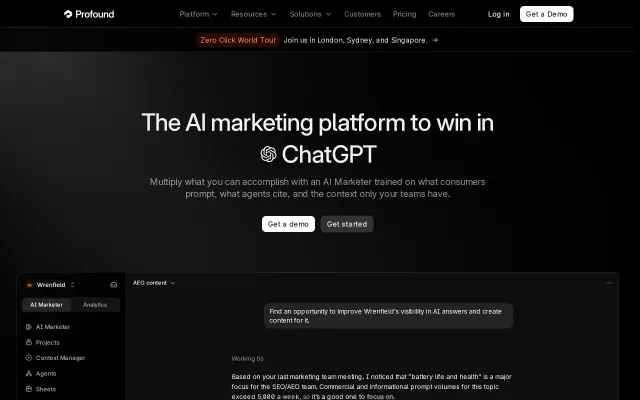
- Track what's actually landing with Otterly AI (a directory starting point, not a newly verified performance comparison) or Profound.
Manual Citation Review
Proposed workflow, not newly executed: Write down a relevant prompt panel before checking results. For each run record the exact prompt, timestamp, product surface, mode, locale and conversation context. Save the answer and cited URLs; open the links and check the adjacent claims. Keep API runs separate from consumer-interface runs, and distinguish successful uncited responses from errors, missing observations and searches not performed. Repeat comparable observations over time without treating one before/after change as causal proof. See the measurement guide.
Implementation Checklist
Tick items off as you implement, this page remembers your progress on this device.
Crawlability
- robots.txt allows PerplexityBot
- Target pages are in sitemap.xml, not noindex
- Confirmed real PerplexityBot hits in server logs against the published IP list
Freshness
- dateModified is accurate and updates when content actually changes
- Statistics and examples checked against their real effective dates; historical measurements keep their original dates and populations
- A visible "last updated" line on the page itself, not just in schema
Structure and Schema
- Article schema (headline, datePublished, dateModified, author, description)
- FAQPage schema where content has real Q&A
- Named author with a real, credentialed bio
- Answers are clear and sufficiently qualified, without an arbitrary word-count target
Distribution and Measurement
- Genuine, non-promotional presence in relevant Reddit discussion
- Tracking actual Perplexity citations with Otterly AI, Profound, or another AI visibility monitoring tool
About CitedIndex: This is sourced education, not an analysis of thousands of listings or an original Perplexity citation study. The linked directory pages can help identify monitoring options; coverage and collection methods should be checked with each vendor. See our methodology.
Editorial correction: 5 September 2026. Corrected unsupported retrieval counts, freshness windows, ranking and schema-lift claims, narrowed crawler training statements and separated API documentation from consumer behavior. The prior crawler-documentation review date, 23 August 2026, is retained as historical context, not extended to unsupported measurements. No citation samples, indexing timelines or vendor capabilities were newly tested. Original publication and verification dates are retained.



Frequently asked questions
How long does it take to get cited by Perplexity?
Does blocking PerplexityBot in robots.txt fully keep my content out?
Does PerplexityBot train Perplexity's AI models?
Why does Reddit get cited so much on Perplexity?
Is domain authority irrelevant on Perplexity?
How many sources does a typical Perplexity answer cite?
Does schema markup actually help on Perplexity?
The digestFree
Who's winning AI citations.
The AI visibility tools we add and the guides we write, by email, at most once a week.
Last issue · No. 1 · 13 October 2026GEO and Content Tools for Agencies, plus 3 new tools
One-click unsubscribe
The CitedIndex digest
New GEO tools, what their prices did and our latest articles, in your inbox.
Last issue: GEO and Content Tools for Agencies, plus 3 new tools · 13 October 2026