LLM Pulse
AI search visibility and reputation tracking across the widest named-engine list in this directory, from €49/month.
Best forglobal or multi-market brands
Our verdict
LLM Pulse's real differentiator is breadth: 14 named AI engines, including several (Grok, DeepSeek, Qwen, MiniMax, Mistral, Amazon Rufus) that most competing trackers in this directory don't cover at all, plus a CLI and REST API sharing one key.
Listed for the widest named AI-engine coverage of any tool in this directory, flagged for a real gap between its own “5/5” review claim and the 4-star/4-review Trustpilot record found at verification time.
The CitedIndex digest
New tools, fresh verdicts, and who's earning the top spots. One short email.

What's great
- Tracks 14 named AI engines, the widest coverage of any tool in this directory, including Grok, DeepSeek, Qwen, MiniMax, Mistral and Amazon Rufus alongside the usual ChatGPT/Perplexity/Gemini core.
- Ships a documented CLI (npm/pnpm/yarn/Bun) and REST API on the same account API key, not a dashboard-only tool.
- Bootstrapped by three named co-founders and profitable since its first customer, with over 100 paying customers by December 2025, real, checkable operator transparency.
- Five pricing tiers scale from €49 (solo) to €1,199/month (agency-scale, 2,400 prompts), rather than forcing an early jump to custom/sales-gated pricing.
Watch-outs
- LLM Pulse's own materials describe “5/5 ratings on both Google and Trustpilot,” but the actual Trustpilot page shows a 4-star rating from 4 reviews at verification time, a real discrepancy between the marketing claim and the public review record.
- G2 shows only 1 review (5.0) despite the company's own claim of “5,000+ users worldwide”, thin independent verification relative to the marketing claim.
- Entry-tier prompt allowance is modest (50 tracked prompts on the €49 Starter plan) next to GeoRankers' 450+ AI-answer checks at a comparable price point.
- Pricing is set in EUR, which converts awkwardly against USD-quoted competitors for teams billing in dollars.
Also note: The site does not state which tiers include full CLI/API access versus a possible rate limit tied to the account's prompt allowance.
How LLM Pulse compares
The other tools buyers weigh against LLM Pulse, and when to pick each.
| Tool | Best when you want… |
|---|---|
| LLM PulseThis page | global or multi-market brands |
| GeoRankers | Cheaper self-serve entry ($41/mo) if 4 engines (ChatGPT, Google AI Search, Gemini, Perplexity) is enough coverage. |
| AthenaHQ | YC-backed with 9-engine coverage and a more established independent-review record. |
| Otterly AI | The cheapest self-serve entry if you want a simple first look rather than 14-engine breadth. |
What is LLM Pulse?
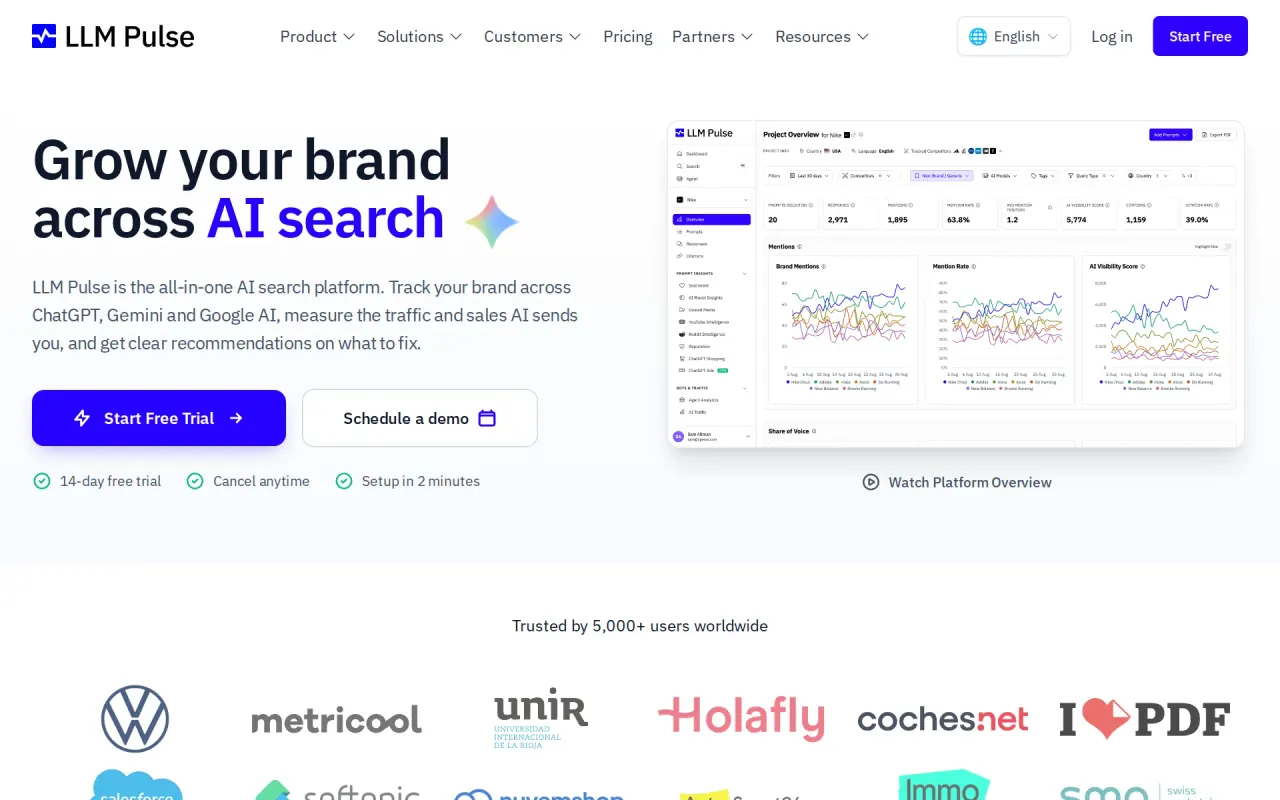
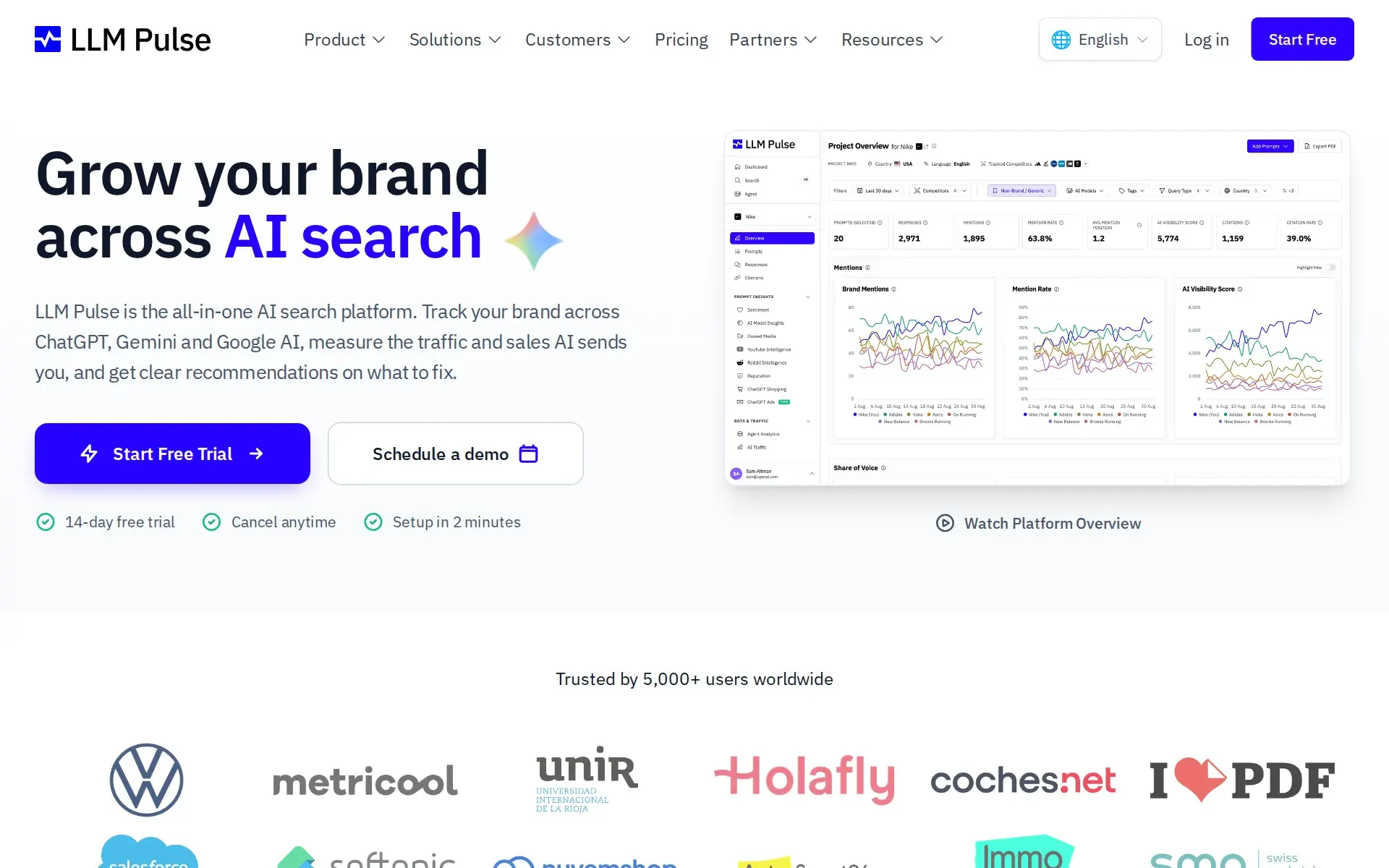
LLM Pulse is an AI search visibility and reputation platform founded by Esteve Castells, Daniel Peris Molina and Adrian Rojas, launched in July 2025 after Castells (an SEO/GEO consultant) and Peris (a 15-year growth and SaaS-scaling founder) teamed up with developer Rojas. The product is 100% bootstrapped and profitable since its first customer, reporting over 100 paying customers by December 2025. It tracks brand mentions, citations and sentiment across more named AI engines than any other tool in this directory, ChatGPT, Perplexity, Google AI Mode, Google AI Overviews, Gemini, Grok, Claude, Copilot, Meta AI, DeepSeek, Qwen, MiniMax, Mistral and Amazon Rufus, with plans starting at €49/month.
What does LLM Pulse do?
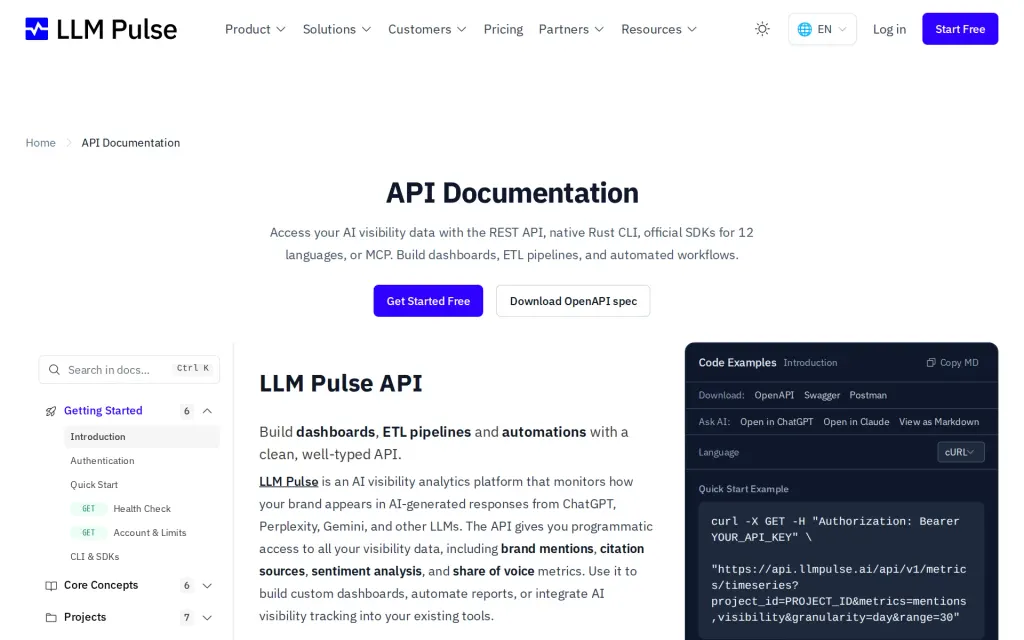
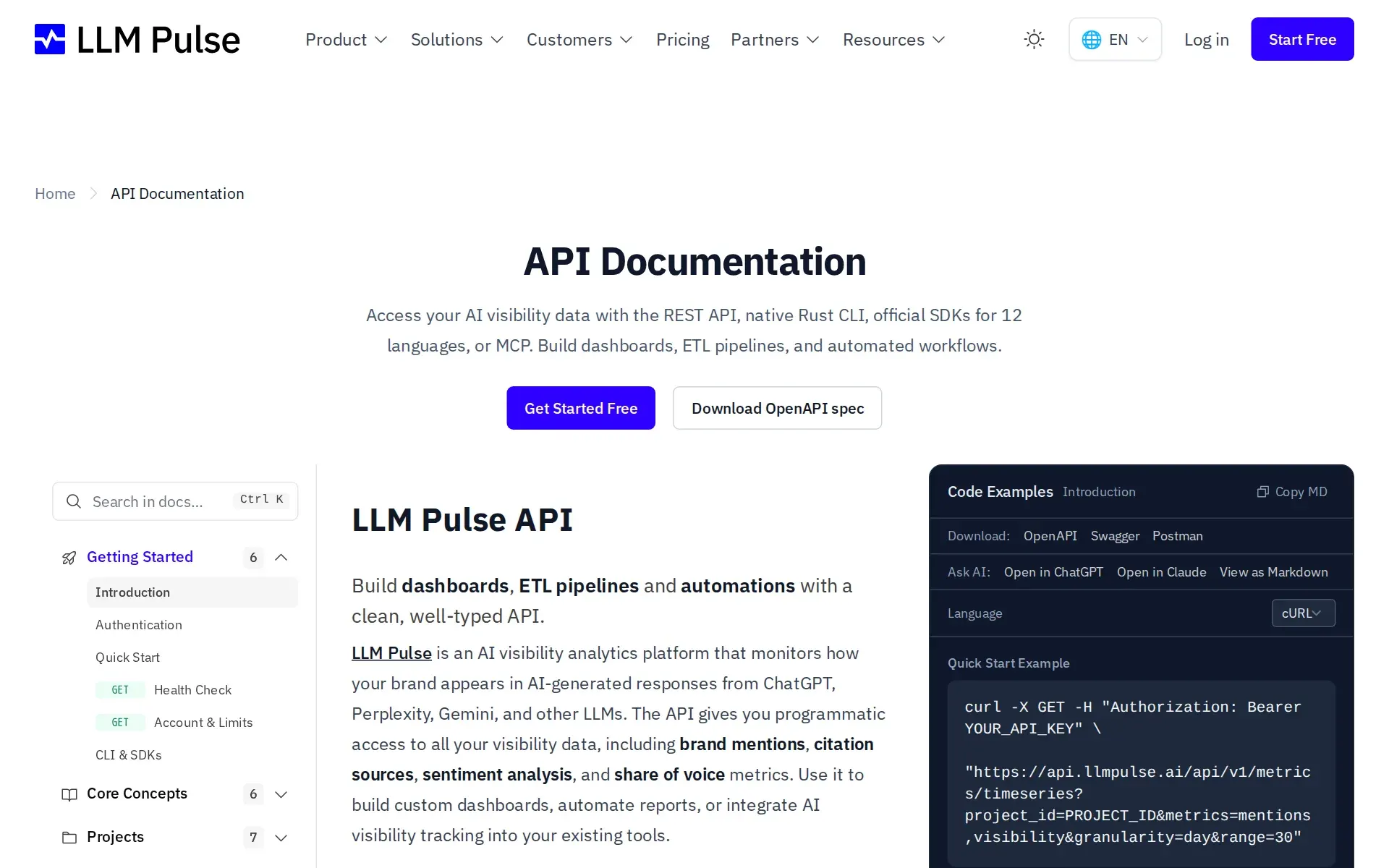
A user connects a brand and defines the prompts or topics to monitor, and LLM Pulse periodically queries each selected AI engine to log whether, how and in what sentiment the brand is mentioned, alongside which named competitors surface instead. A citation-analysis module identifies which web sources the engines cite when constructing an answer. A traffic-measurement feature connects to the brand's own analytics to correlate AI-engine mentions with actual referred visits and sales, and a bot-analytics view tracks AI crawler activity (GPTBot, PerplexityBot and similar) against the site's own server logs. A shopping-tracking feature checks whether and how a brand's products surface in ChatGPT's product-recommendation answers. Every account gets an LLM Pulse CLI (installable via npm, pnpm, yarn or Bun) and a documented REST API sharing the same API key, so the same visibility data can be pulled into an existing reporting pipeline instead of read only from the dashboard; an in-app “LLM Pulse Agent” copilot answers ad hoc questions about the account's own data and can pull metrics or compare named competitors on request.
How LLM Pulse works
- Connect a brand and define the prompts or topics to monitor across the 14 named engines LLM Pulse tracks.
- LLM Pulse periodically queries each selected engine, logging whether, how and in what sentiment the brand is mentioned, alongside which named competitors surface instead.
- A citation-analysis module identifies which web sources the engines cite, and a traffic-measurement feature connects to the brand's own analytics to correlate AI-engine mentions with actual referred visits and sales.
- Pull the same data through the LLM Pulse CLI or REST API, or ask the in-app 'LLM Pulse Agent' copilot ad hoc questions about the account's own visibility data.
Who is LLM Pulse for?
- Global or multi-market brands that need visibility tracking across a long tail of AI engines — Grok, DeepSeek, Qwen, MiniMax, Mistral, Amazon Rufus — that most competing trackers don't cover at all.
- Developers who want to script visibility checks through a CLI (npm/pnpm/yarn/Bun) and REST API sharing one key, rather than reading results by hand.
- E-commerce teams that want to know whether their products surface in ChatGPT's shopping-recommendation answers, not just whether the brand is named.
Key features
- Widest tracked-engine list in this directory: 14 named AI engines: ChatGPT, Perplexity, Google AI Mode, Google AI Overviews, Gemini, Grok, Claude, Copilot, Meta AI, DeepSeek, Qwen, MiniMax, Mistral and Amazon Rufus.
- CLI + documented REST API: A terminal CLI (npm/pnpm/yarn/Bun) and REST API share one API key, for pulling visibility data into an existing workflow.
- LLM Pulse Agent copilot: An in-app AI copilot that answers questions about the account's own visibility data and can pull metrics or compare competitors.
- Bot/crawler analytics: Tracks AI crawler activity (GPTBot, PerplexityBot, etc.) against the site's own server logs.
- Shopping tracking: Checks whether and how a brand's products surface in ChatGPT's product-recommendation answers.
- Traffic + sentiment measurement: Connects to the brand's own analytics to correlate AI-engine mentions with referred visits and sales, and tracks sentiment over time.
What are LLM Pulse's use cases?
- Global brand baseline across a long tail of engines: A multi-market brand checks visibility not just on ChatGPT/Perplexity but on Grok, DeepSeek, Qwen and Mistral, where most competing trackers offer no coverage at all.
- Developer-integrated reporting: A developer pulls weekly visibility reports via the LLM Pulse CLI into an existing CI/reporting pipeline instead of checking the dashboard by hand.
- E-commerce shopping-recommendation check: An online retailer uses shopping tracking to see whether its products are being recommended when shoppers ask ChatGPT for buying advice in its category.
Why use LLM Pulse?
- Tracks 14 named AI engines, including Grok, DeepSeek, Qwen, MiniMax, Mistral and Amazon Rufus, well beyond the ChatGPT/Perplexity/Gemini core most competitors stop at.
- A documented CLI and REST API share one API key with the dashboard, letting a developer script visibility checks rather than reading them by hand.
- Founded by three named, bootstrapped co-founders (Esteve Castells, Daniel Peris Molina, Adrian Rojas) who report being profitable since their first customer, real operator transparency rather than an anonymous SaaS.
- Five pricing tiers (€49 to €1,199/month) scale cleanly from a solo operator to an agency, rather than jumping straight from a small plan to custom enterprise pricing.
Pros & cons
Pros
- Tracks 14 named AI engines, the widest coverage of any tool in this directory, including Grok, DeepSeek, Qwen, MiniMax, Mistral and Amazon Rufus alongside the usual ChatGPT/Perplexity/Gemini core.
- Ships a documented CLI (npm/pnpm/yarn/Bun) and REST API on the same account API key, not a dashboard-only tool.
- Bootstrapped by three named co-founders and profitable since its first customer, with over 100 paying customers by December 2025, real, checkable operator transparency.
- Five pricing tiers scale from €49 (solo) to €1,199/month (agency-scale, 2,400 prompts), rather than forcing an early jump to custom/sales-gated pricing.
Cons
- LLM Pulse's own materials describe “5/5 ratings on both Google and Trustpilot,” but the actual Trustpilot page shows a 4-star rating from 4 reviews at verification time, a real discrepancy between the marketing claim and the public review record.
- G2 shows only 1 review (5.0) despite the company's own claim of “5,000+ users worldwide”, thin independent verification relative to the marketing claim.
- Entry-tier prompt allowance is modest (50 tracked prompts on the €49 Starter plan) next to GeoRankers' 450+ AI-answer checks at a comparable price point.
- Pricing is set in EUR, which converts awkwardly against USD-quoted competitors for teams billing in dollars.
Limitations
- The site does not state which tiers include full CLI/API access versus a possible rate limit tied to the account's prompt allowance.
LLM Pulse pricing
- Starter€49 / /month
- Growth€99 / /month
- Scale€299 / /month
- Scale+€599 / /month
- Scale++€1,199 / /month
See current pricing on llmpulse.ai ↗Compare LLM Pulse alternatives →
LLM Pulse specs
Pricing
- Pricing model
- subscription
- Free tier
- ✗ No
LLM Pulse review
LLM Pulse's real differentiator is breadth: 14 named AI engines, including several (Grok, DeepSeek, Qwen, MiniMax, Mistral, Amazon Rufus) that most competing trackers in this directory don't cover at all, plus a CLI and REST API sharing one key. Its bootstrapped, profitable-from-day-one story is genuine and well-documented. But its independent review record, 4 Trustpilot reviews, 1 G2 review, undercuts its own “5,000+ users” framing, and entry-tier prompt allowances are modest next to similarly-priced rivals like GeoRankers. It's the strongest pick here for a brand that specifically needs long-tail engine coverage; a buyer who mainly cares about ChatGPT/Perplexity/Gemini and wants a heavily-reviewed vendor should compare it against AthenaHQ or Otterly AI first.
Listed for the widest named AI-engine coverage of any tool in this directory, flagged for a real gap between its own “5/5” review claim and the 4-star/4-review Trustpilot record found at verification time.
Frequently asked questions
How much does LLM Pulse cost?
Which AI engines does LLM Pulse track?
Does LLM Pulse have an API or CLI?
Who built LLM Pulse, and is it independently reviewed?
LLM Pulse alternatives
- GeoRankers
Cheaper self-serve entry ($41/mo) if 4 engines (ChatGPT, Google AI Search, Gemini, Perplexity) is enough coverage.
- AthenaHQ
YC-backed with 9-engine coverage and a more established independent-review record.
- Otterly AI
The cheapest self-serve entry if you want a simple first look rather than 14-engine breadth.
- AIclicks
A published API at lower tiers, if breadth of engines matters less than committed API access from the start.
Get a quote from LLM Pulse
Tell us what you need. We make the introduction to LLM Pulse.